The concept of increasing productivity by 1% every day is known as the Kaizen principle, which is a continuous improvement philosophy that originated in Japan. It emphasizes small, incremental improvements over time, rather than trying to make major changes all at once. This approach can be applied to any area of life, including sports and business.
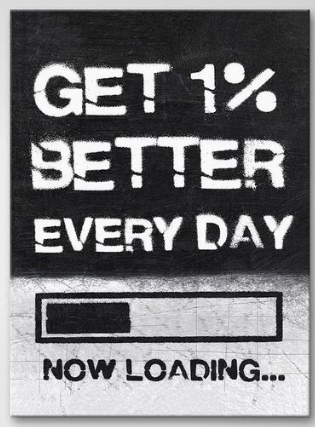
It is all too easy to overestimate the significance of a single defining moment while underestimating the value of making small daily improvements. We all too often convince ourselves that massive success necessitates massive action. We put pressure on ourselves to make some earthshattering improvement, whether it is losing weight, building a business, writing a book, winning a championship, or achieving any other goal.
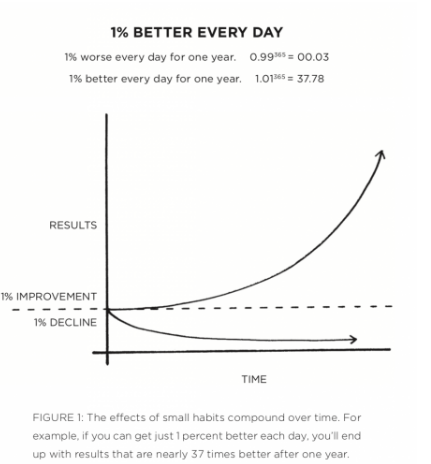
Meanwhile, improving by 1% isn’t particularly significant—sometimes it’s barely noticeable—but it can be far more significant, especially in the long run. It’s amazing how much of a difference a small improvement can make over time. Here’s how the math works: if you improve by 1% every day for a year, you’ll be 37 times better by the end. In contrast, if you get 1% worse every day for a year, you’ll be nearly at zero. What begins as a small victory or a minor setback grows into much more.

This concept is super well defined in Atomic Habits: An Easy & Proven Way to Build Good Habits & Break Bad Ones by James Clear. The illustration comes from this amazing book that I recommend to all of you.
In the coming month, I will be preparing for a karate competition that will focus specifically on Kata. I will be guiding my practice and training with the Kaizen principle, focusing on continuous improvement and striving to reach my full potential in this discipline.
In martial arts, such as karate, a kata is a pre-planned sequence of movements. It is usually done alone, but it can also be done with a partner. A kata’s purpose is to practice and perfect specific techniques and combinations while also developing discipline, focus, and muscle memory.
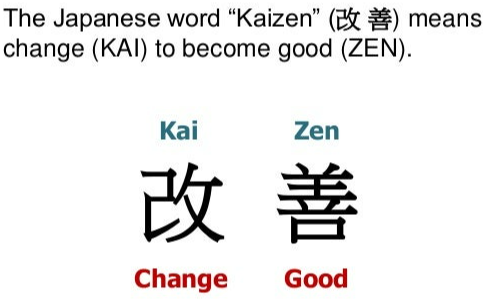
The Kaizen principle is one that is frequently applied to kata practice. Kaizen is a Japanese term that means “improvement” or “better change.” It is a philosophy that emphasizes lifelong learning in all aspects, from personal development to business. The Kaizen principle can be applied to kata practice in the context of karate by constantly striving to improve one’s technique, form, and understanding of the kata.
The Kaizen principle can be applied in a variety of ways in karate. You can, for example, concentrate on one aspect of your kata every day, such as your footwork or your breathing. By breaking down the kata into smaller parts, you can work on improving each individual aspect before bringing them all together to form the complete kata. You can also use visualization techniques to mentally practice your kata and identify areas where you can improve. By consistently working on your kata in this manner, you will see steady progress toward your goal of competing in one month.
I am also attempting to apply some of these principles in my work as Worldwide Channel Sales Lead for Microsoft [Consumer Sales Organization]. Salespeople in the business world can apply the Kaizen principle in a variety of ways. One strategy is to set small, incremental goals for themselves, such as making one more call per day or spending an extra 10 minutes researching a potential customer. If they consistently work toward these small goals, they will see an overall improvement in their sales performance. Another strategy is to evaluate their sales process on a regular basis and identify areas for improvement. Using metrics such as conversion rate, closing rate, and customer feedback, they can assess their performance and identify areas for improvement. They can also seek training and coaching to learn new sales techniques and strategies that will help them improve their performance.
Another way to apply Kaizen in sales is through technology. CRM and other sales enablement tools can help salespeople keep track of leads, opportunities, and customer interactions. They can also track their sales performance and identify areas for improvement by using analytics and reporting tools. Personally, I believe that continuous improvement is possible if you seek out insights on a regular basis and can pitch them to your partner in order to drive real action. I developed a practical tool and approach to help our sales team quickly and automatically identify and generate insights. Power BI is an excellent tool for enabling this approach.
Power BI is a business intelligence tool that can assist salespeople in driving insights by displaying sales data visually. Salespeople can use Power BI to quickly and easily access and analyze data from a variety of sources, including CRM systems, Excel spreadsheets, and SQL databases. It enables users to create interactive dashboards and reports that provide a comprehensive view of their sales performance and trends, such as sales by region, product, or customer. By comparing their sales performance to industry benchmarks, setting goals, and tracking progress, salespeople can use Power BI to identify opportunities and make data-driven decisions. To summarize, Power BI can assist salespeople in making better decisions, prioritizing their activities, and ultimately increasing their sales.
It’s also worth noting that Kaizen is about more than just improving one’s performance; it’s about creating a culture of continuous improvement. By encouraging your sales team to embrace the Kaizen principle and recognize the importance of small, incremental improvements, you can foster a culture of continuous improvement that benefits not only the sales team but the entire organization.
Finally, you can use the Kaizen principle to make small, incremental improvements in your kata, sales performance, and overall business performance. Working consistently toward small goals can lead to big results over time. You can also inspire others to improve by fostering a culture of continuous improvement.

 Md Consulting
Leave a comment