Introduction
In the ever-evolving landscape of talent acquisition, organizations face a critical decision: whom to bring on board. While technical skills and qualifications are essential, they are not the sole determinants of success. Enter attitude—the intangible force that shapes our interactions, drives our actions, and ultimately defines our impact.
The Myth of Skills-First Hiring
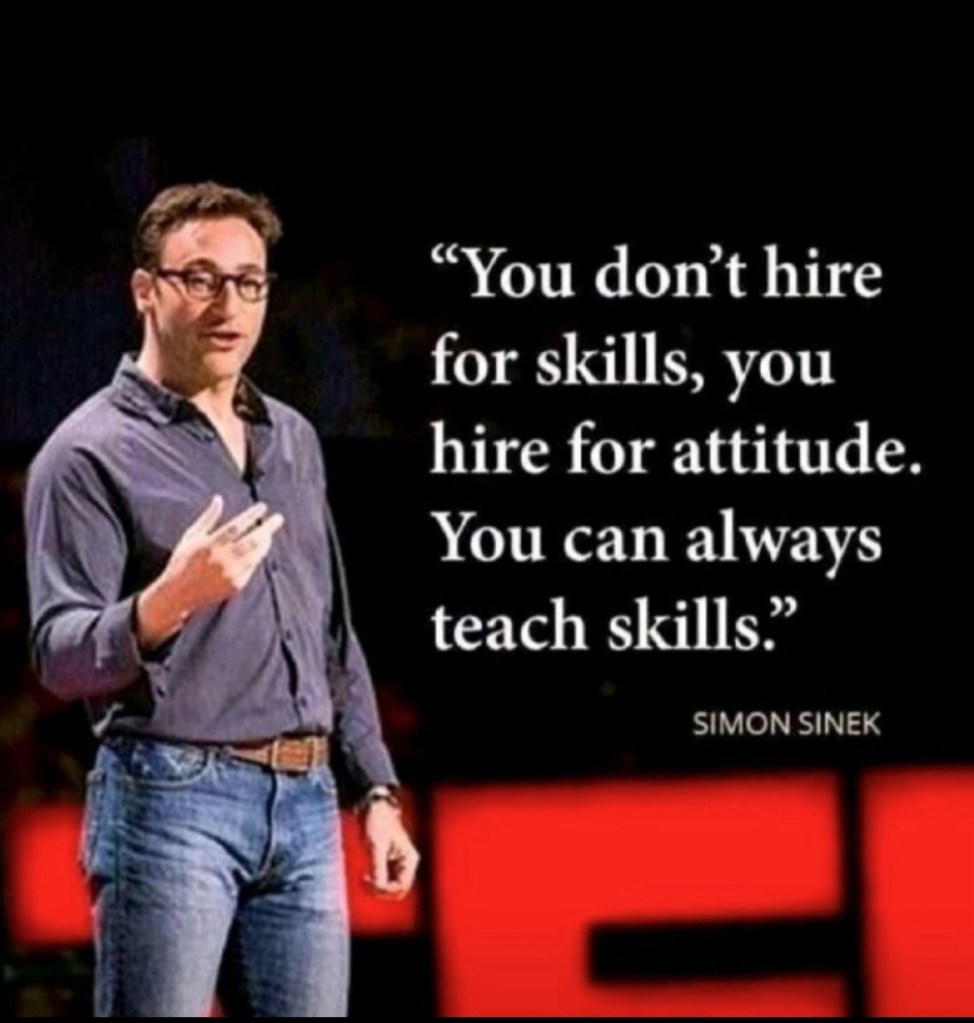
Simon Sinek’s succinct wisdom—“You don’t hire for skills; you hire for attitude. You can always teach skills.”—holds profound implications. Let’s dissect this notion further.
Skills as Building Blocks
Skills are like building blocks. They provide the foundation upon which we construct our professional lives. We learn them through education, training, and experience. They are measurable, quantifiable, and often listed on resumes. But here’s the catch: skills alone do not guarantee success.
The Attitude Advantage
Attitude—the mindset, outlook, and emotional disposition—is the secret sauce. It transcends the tangible and permeates every aspect of our work. Here’s why attitude matters:
- Resilience: Attitude determines how we bounce back from setbacks. When faced with challenges, do we crumble or rise stronger? Resilience, fueled by a positive attitude, propels us forward. This is something I am learning from Karate. Read more clicking on the following link: https://davidmerzel.wordpress.com/2024/02/19/a-story-of-resilience/
- Adaptability: The business landscape is dynamic. Skills become obsolete, technologies evolve, and markets shift. An adaptable attitude allows us to embrace change, learn new skills, and thrive in uncertainty. Read more on how to focus on the the controllable clicking here: https://davidmerzel.wordpress.com/2022/12/12/focus-on-the-controllable/
- Leadership: Great leaders inspire not just through expertise but through their attitude. They lead by example, instill confidence, and ignite passion. Their attitude sets the tone for organizational culture. Read more on how I have applied Karate to Leadership clicking here: https://davidmerzel.wordpress.com/2023/03/04/from-the-dojo-to-the-boardroom-applying-karate-principles-to-leadership/
- Collaboration: Attitude shapes our interactions with colleagues, clients, and stakeholders. A collaborative spirit fosters teamwork, creativity, and innovation. It transforms a group of individuals into a cohesive force.
- Problem-Solving: Skills provide tools; attitude determines how we wield them. A curious, solution-oriented mindset drives effective problem-solving. It’s the difference between merely applying knowledge and creating breakthroughs.
Cultivating Attitude
So, how do we hire for attitude?
- Values Alignment: Look beyond resumes. Assess whether a candidate’s values align with your organization’s mission. Attitude flourishes where purpose meets passion.
- Behavioral Interviews: Ask situational questions. Explore how candidates handled adversity, collaborated, and adapted. Their responses reveal their attitude under pressure.
- Growth Mindset: Seek individuals with a growth mindset—the belief that abilities can be developed through effort and learning. They thrive on challenges and view setbacks as opportunities.
- Emotional Intelligence: Attitude encompasses emotional intelligence. Can the candidate empathize, communicate effectively, and build relationships? These soft skills matter.
Changing the Paradigm
Recently, I’ve observed a trend: many leaders prioritize skills over attitude. They focus on technical prowess, certifications, and past achievements. While skills are crucial, they should not overshadow attitude. Here’s why:
- Skills Are Teachable: Yes, you can teach skills. Training programs, workshops, and mentorship can enhance technical abilities. Attitude, however, is harder to mold. It’s deeply ingrained and shapes behavior.
- Culture Impact: Attitude ripples through an organization. Leaders with positive attitudes foster a culture of collaboration, innovation, and resilience. Conversely, skill-centric leaders risk creating silos and stifling creativity.
- Long-Term Success: Skills may secure short-term wins, but attitude ensures long-term success. A team with the right mindset adapts, learns, and thrives even when skills evolve.
Conclusion
Skills are essential, but attitude is the multiplier. When you hire for attitude, you invest in a mindset that shapes not only individual success but also organizational culture. So, next time you evaluate a candidate, remember Simon Sinek’s wisdom: Attitude is the compass that guides skills toward meaningful impact.
Share this message, ignite conversations, and let attitude be your North Star.

 Md Consulting
Leave a comment