Defining GTM: The Heartbeat of Business Success
Thru my experience, I’ve come to see Go-to-Market (GTM) strategy as the lifeblood of business success. It’s not just a plan; it’s the rhythm that keeps a company moving forward, adapting, and thriving in an ever-changing market landscape.
What is a Go-to-Market Strategy?
A Go-to-Market strategy is a comprehensive plan that outlines how a company will reach its target customers and achieve competitive advantage. It’s the roadmap that guides a product or service from conception to delivery, ensuring that every step aligns with the company’s overall business objectives. During my time at Unilever, I had my first real encounter with GTM strategy. We were preparing to launch Bertolli in Belgium, and I quickly realized that success wasn’t just about having a great product. It was about understanding our market, knowing our customers, and creating a plan that would resonate with them.
The evolution of GTM in the digital age
The digital revolution has transformed GTM strategies. When I joined Microsoft in 2007, we were still largely focused on traditional retail channels. Fast forward to today, and our GTM strategies encompass a complex web of digital platforms, e-commerce, and data-driven marketing. For instance, when we launched our productivity suite in Latin America, our GTM strategy was heavily digital-focused. We leveraged online platforms, social media, and targeted digital advertising to reach our audience.
Why GTM is crucial for business success
A well-executed GTM strategy can be the difference between a product that soars and one that sinks. It provides clarity, aligns teams, and ensures that resources are used effectively. At Microsoft, our GTM strategy for a major product launch in Belgium exemplifies this. We created an interactive showroom for press and influencers, garnering extensive coverage through 18 TV outlets while maintaining cost efficiency. This innovative approach not only led to successful product adoption but also earned us the nomination for ‘Marketer of the Year.”
Case study: Microsoft’s global GTM approach
Let me share a brief case study from my time as a Regional Director. We implemented a streamlined and scalable strategy across multiple retailers, which resulted in accelerating the penetration for our products. We introduced an innovative process, which became recognized as a best practice worldwide. This approach allowed us to tailor our GTM strategy to each retailer’s unique needs while maintaining a consistent global message.
Defining GTM: The Heartbeat of Business Success
Thru my experience, I’ve come to see Go-to-Market (GTM) strategy as the lifeblood of business success. It’s not just a plan; it’s the rhythm that keeps a company moving forward, adapting, and thriving in an ever-changing market landscape.
What is a Go-to-Market Strategy?
A Go-to-Market strategy is a comprehensive plan that outlines how a company will reach its target customers and achieve competitive advantage. It’s the roadmap that guides a product or service from conception to delivery, ensuring that every step aligns with the company’s overall business objectives. During my time at Unilever, I had my first real encounter with GTM strategy. We were preparing to launch Bertolli in Belgium, and I quickly realized that success wasn’t just about having a great product. It was about understanding our market, knowing our customers, and creating a plan that would resonate with them.
The evolution of GTM in the digital age
The digital revolution has transformed GTM strategies. When I joined Microsoft in 2007, we were still largely focused on traditional retail channels. Fast forward to today, and our GTM strategies encompass a complex web of digital platforms, e-commerce, and data-driven marketing. For instance, when we launched our productivity suite in Latin America, our GTM strategy was heavily digital-focused. We leveraged online platforms, social media, and targeted digital advertising to reach our audience.
Why GTM is crucial for business success
A well-executed GTM strategy can be the difference between a product that soars and one that sinks. It provides clarity, aligns teams, and ensures that resources are used effectively. At Microsoft, our GTM strategy for a major product launch in Belgium exemplifies this. We created an interactive showroom for press and influencers, garnering extensive coverage through 18 TV outlets while maintaining cost efficiency. This innovative approach not only led to successful product adoption but also earned us the nomination for ‘Marketer of the Year.”
Case study: Microsoft’s global GTM approach
Let me share a brief case study from my time as a Regional Director. We implemented a streamlined and scalable strategy across multiple retailers, which resulted in accelerating the penetration for our products. We introduced an innovative process, which became recognized as a best practice worldwide. This approach allowed us to tailor our GTM strategy to each retailer’s unique needs while maintaining a consistent global message.
AI Teaching AI: The Future of Workforce Upskilling
As previously mentioned, I am excited to share excerpts from my upcoming book. I’m in the process of writing a comprehensive guide that deep-dives into the world of go-to-market (GTM) strategy, blending it with personal experiences and passions that have shaped my career. I will also explore how AI is impacting all of us in sales, marketing, sales enablement, operation, and finance, from insights to planning, pitching and execution. This book will give you a new and fresh perspective on building strong GTM plans, leveraging a consumer and partner-centric approach, and asking the right questions to create real differentiation and impactful storytelling.
In today’s rapidly evolving business landscape, the ability to adapt and upskill is no longer a luxury—it’s a necessity. As artificial intelligence (AI) continues to reshape industries, companies are faced with an unprecedented challenge: how to quickly and effectively train their workforce in AI technologies. Interestingly, the solution may lie in AI itself.
The AI-Powered Learning Revolution
The irony is not lost on us: AI teaching humans about AI. Yet, this approach is proving to be not just effective, but transformative. Let’s explore how AI is revolutionizing the way we learn about AI:
1. Personalized Learning Paths
AI-powered platforms are leveraging chatbots to provide personalized feedback to students. These intelligent tutors can assess a learner’s progress in real-time, identifying strengths and weaknesses, and tailoring the curriculum accordingly. This level of personalization ensures that each employee receives the most relevant and impactful training possible.
Real-world example: Century Tech uses AI to create personalized learning paths for students based on their performance and learning style. This technology can be easily adapted for corporate training programs, ensuring that employees receive tailored AI education.
2. On-Demand Knowledge Access
AI chatbots serve as 24/7 tutors, answering questions on complex AI topics instantly. This accessibility accelerates the learning process and allows employees to learn at their own pace, fitting education into their busy schedules.
Real-world example: Georgia Tech’s AI teaching assistant, Jill Watson, answers student questions about course content and logistics, demonstrating how AI can provide constant support in learning environments.
3. Adaptive Assessments
AI algorithms can design and adjust assessments based on a student’s performance. This dynamic approach ensures that the difficulty level is always appropriate, challenging learners without overwhelming them.
Real-world example: Knewton provides adaptive learning technology that adjusts content difficulty based on student responses, a feature that could be invaluable in corporate AI training programs.
4. Immersive Learning Experiences
Virtual and augmented reality powered by AI can create immersive learning environments. These simulations allow employees to practice applying AI concepts in realistic scenarios, bridging the gap between theory and practical application.
Real-world example: Mursion offers AI-powered virtual reality simulations for soft skills development, which could be adapted to create realistic scenarios for applying AI in business contexts.
Corporate Trailblazers: J&J, Cisco, and Beyond
Industry giants like Johnson & Johnson and Cisco Systems are at the forefront of this AI-driven learning revolution. They’re exploring innovative ways to incorporate generative AI tools into their upskilling programs. This forward-thinking approach not only prepares their workforce for the AI era but also positions these companies as leaders in technological adaptation.
But they’re not alone. Other companies are also making significant strides:
- IBM has developed the Teacher Advisor, an AI-powered platform that helps create lesson plans. This technology could be adapted to help corporate trainers develop AI curricula.
- Coursera, as mentioned earlier, is incorporating AI-powered chatbots to provide personalized feedback to students, a model that could be replicated in corporate training programs.
The MD Consulting Approach
At MD Consulting, we recognize the transformative power of AI in sales and marketing strategies. Our AI-driven sales strategies are a core part of our consulting practice, covering aspects such as:
- AI-powered market analysis and trend prediction
- Personalized customer journey mapping using AI insights
- AI-enhanced sales forecasting and pipeline management
- Automated lead scoring and prioritization
- Automated pitch deck solution for more consistency and scalability
We specialize in helping organizations build strong consumer and partner-centric strategies. Our expertise in aligning leadership actions with company values ensures that businesses can achieve their goals while maintaining authenticity and trust. Learn more about how we can support your organization at MD Consulting. More Details on MD Consulting here: https://davidmerzel.com/
The Future of Learning is Here
The integration of AI into learning processes is not just a trend—it’s a paradigm shift. As we move forward, we can expect to see:
- More sophisticated AI tutors capable of engaging in complex dialogues
- AI-generated content that adapts in real-time to learner feedback
- Predictive analytics that forecast skill gaps before they become problematic
- Collaborative AI systems that facilitate peer-to-peer learning at scale
Real-world example: Pymetrics is already using AI-based games to assess skills and match individuals with career opportunities. In the future, such technology could be used to identify employees’ AI aptitudes and guide their learning journeys.
Conclusion
The synergy between AI and education is creating a powerful ecosystem for rapid upskilling. As companies race to equip their workforce with AI knowledge, they’re finding that AI itself is their most potent ally in this endeavor. The future of learning is here, and it’s powered by the very technology we’re striving to understand.
For CSOs and CMOs, embracing AI-driven learning isn’t just about staying current—it’s about future-proofing your organization. By leveraging AI to teach AI, you’re not only addressing immediate skill gaps but also cultivating a culture of continuous learning and innovation.
Are you ready to revolutionize your organization’s approach to AI upskilling? Let’s connect and explore how MD Consulting can help you navigate this exciting new frontier.
Sources for Further Reading:
- “The Future of AI in Education” – MIT Technology Review
- “Artificial Intelligence in Corporate Training” – Harvard Business Review
- “AI-Powered Learning: Transforming the Workforce” – McKinsey & Company
- “The Impact of AI on Employee Upskilling” – World Economic Forum
- “How AI is Shaping the Future of Education” – Forbes
- “The Role of AI in Personalized Learning” – EdTech Magazine
- “AI in HR: The Path to a More Human Workplace” – Deloitte Insights
Engaging with You
As part of this journey, I also want to engage with you, my readers, by sharing portions of the book. Your feedback, comments, and suggestions will be invaluable in shaping the final product. I believe in the power of co-creation and would love to incorporate any specific concepts or ideas you might have. Of course, I will give full credit to any contributions that make it into the book. I will make sure nothing confidential will be published in the book.
Join the Conversation
If you have any suggestions or would like to discuss specific concepts, feel free to connect with me on LinkedIn thru personal messaging. I’m always happy to have a conversation and explore new ideas. Together, we can create something truly special. For collaboration or project discussions, you can also schedule a conversation in my calendar below or connect with me via email at david.merzel@hotmail.com. I look forward to further discussions!
About MD Consulting
At MD Consulting, we specialize in helping organizations build strong consumer and partner-centric strategies. Our expertise in aligning leadership actions with company values ensures that businesses can achieve their goals while maintaining authenticity and trust.
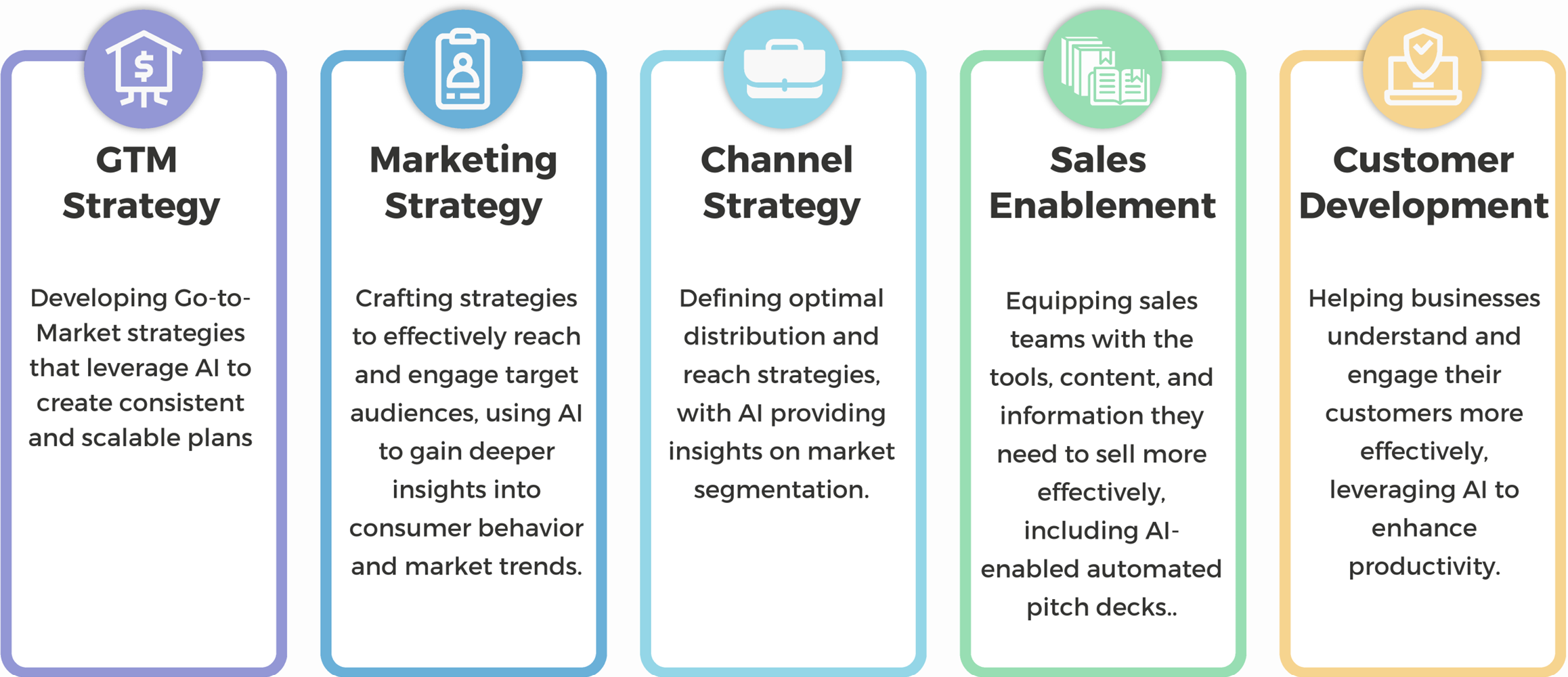
At MD Consulting, we offer our services on a project basis or through a Fractional CMO/CSO model. We are dedicated to exploring how AI can enhance your business operations by providing greater capability, consistency, and scalability. Our expertise includes:
Learn more about how we can support your organization at MD Consulting. More Details on MD Consulting here: https://davidmerzel.com/


 Md Consulting
Leave a comment