
As someone who’s been in the trenches of business transformation for years, I’ve seen my fair share of technological revolutions. But the current AI boom, exemplified by the rise of DeepSeek, is something else entirely. It’s exciting, it’s transformative, and yes, it’s a little bit scary.
The Double-Edged Sword of AI Accessibility
Let’s face it: the ability for any employee to access powerful AI tools like DeepSeek is a game-changer. I’ve seen firsthand how this can supercharge productivity and spark innovation in ways we never thought possible. But as Uncle Ben once said, “With great power comes great responsibility.” And boy, does that apply here.

The Hidden Risks: More Than Just Data Leaks
When I talk to business leaders about AI adoption, their first concern is often data security. And they’re not wrong – the risk of employees inadvertently feeding sensitive information into these AI models is real. But in my experience, the dangers go far beyond just data leaks.
- Regulatory Compliance Nightmares: In my consulting work, I’ve seen companies caught off guard by the regulatory implications of AI use. It’s not just about protecting data; it’s about ensuring your AI practices align with industry regulations and ethical standards.
- Bias and Discrimination: AI models can perpetuate and even amplify existing biases if we’re not careful. This isn’t just an ethical concern – it can lead to real-world consequences and legal troubles.
- Intellectual Property Risks: When employees use AI tools for work-related tasks, who owns the output? This is a thorny issue I’ve seen cause headaches for more than a few clients.
Why Your Current Security Measures Might Not Cut It
I’ve had to deliver this hard truth to many clients: Your traditional data security measures probably aren’t enough. We must consider the age of AI. Here’s why:
- AI Moves Fast, Really Fast: Traditional security measures often can’t keep up with AI’s speed. AI processes and generates information rapidly.
- The Black Box Problem: Many AI models, including large language models like DeepSeek, operate as “black boxes.” It’s hard to track exactly what goes in and what comes out.
- Data Exposure in Training: You might input data carefully. However, the AI could have been trained on sensitive information. The AI might include sensitive information that was used during its training. This can lead to unexpected exposures.
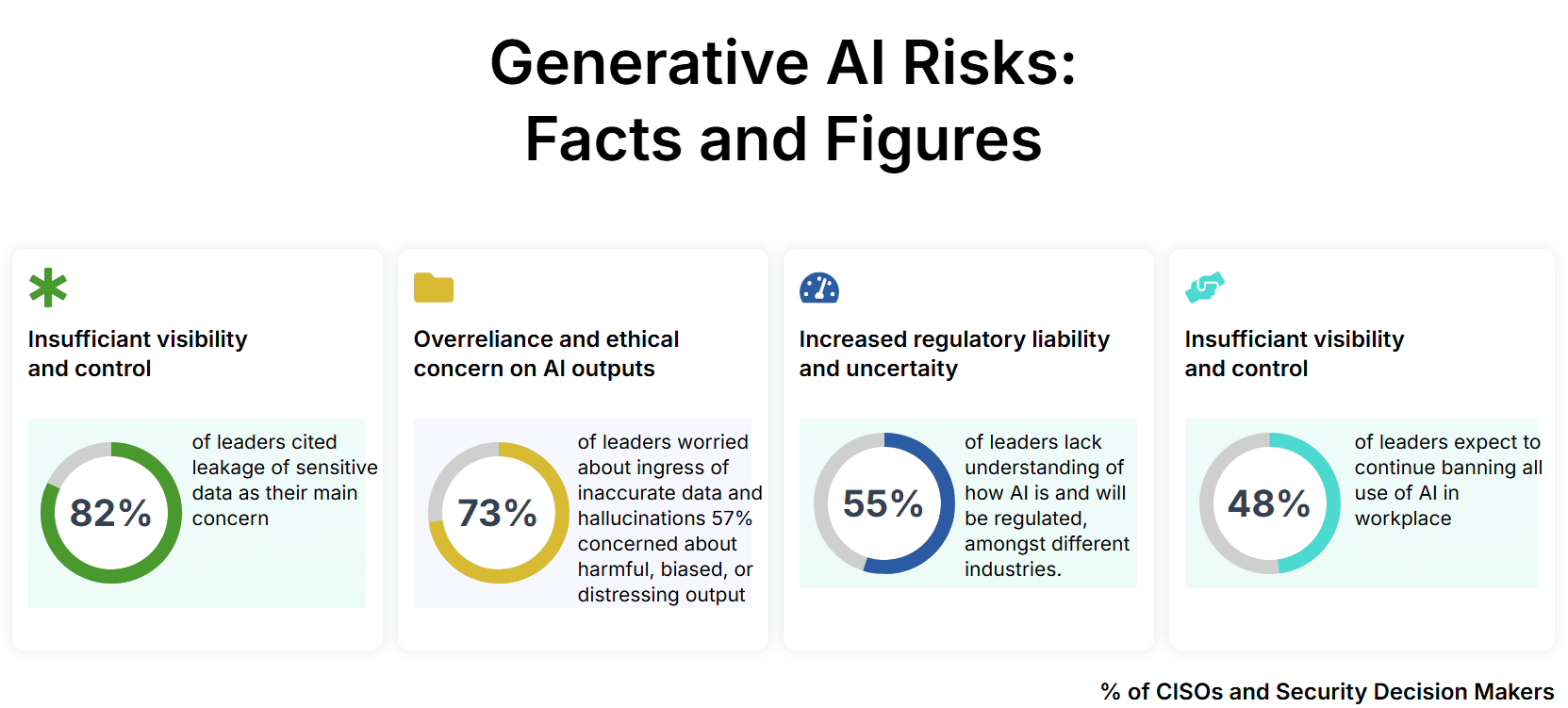
Generative AI poses significant risks, including data leakage, inaccurate and harmful outputs, and regulatory uncertainties. Leaders must address these concerns to ensure ethical and secure AI implementation.
A Ray of Hope: Shield AI
During my recent trip to CES, I had the pleasure of meeting the team behind Shield AI. Their approach to AI security is, quite frankly, refreshing. Instead of trying to lock down AI use, they acknowledge that it’s like trying to hold back the tide. They focus on creating a secure environment for AI interaction.
Shield AI’s platform acts like a protective bubble around AI interactions. It monitors data flows, ensures compliance, and even helps prevent unintended data exposures. But what really impressed me was their focus on usability. They understand that security measures that get in the way of productivity will just be bypassed.
Sure! Here are the top 3 features of Shield AI:
- Real-Time Data Loss Prevention (DLP) and Pseudonymization: Shield AI instantly detects and prevents data leaks during interactions with AI tools. It uses advanced pseudonymization technology to anonymize sensitive data, ensuring privacy without disrupting workflows.
- Compliance & Regulation Assurance: Shield AI continuously monitors for potential violations of GDPR, DORA, and NIS regulations. It provides automated compliance checks, regulatory mapping, alerts, and audit trails to keep your organization secure and compliant in real-time.
- GenAI Reporting and Insights: Shield AI offers detailed reports and actionable insights into AI data interactions. This helps Data Protection Officers (DPOs) and Chief Information Security Officers (CISOs) track usage. It enhances data management and lets them proactively address compliance risks.
These features ensure Shield AI is a comprehensive solution for data protection. It provides compliance and risk management in the era of Generative AI.
I’m excited to dive deeper into Shield AI’s solutions in an upcoming episode of my webcast. Stay tuned for that – I think you’ll find it as fascinating as I do.
Connecting the Dots: The MD Consulting Approach
All of this includes the risks, the challenges, and the innovative solutions. These elements tie directly into the work we do at MD Consulting. In my upcoming book on AI adoption strategies, I dive deep into these issues. It provides a roadmap for businesses looking to harness AI’s power safely and effectively.
Our training programs are designed to help teams understand how to use AI tools. They focus not just on usage but also on responsible and secure application. Through our consulting practice, we work hands-on with businesses of all sizes. We help them develop and implement AI strategies. These strategies balance innovation with security and compliance.
The Path Forward
The AI revolution isn’t coming – it’s here. And while the challenges are real, they’re not insurmountable. With the right approach, tools, and mindset, we can harness the power of AI. This will drive our businesses forward faster and more efficiently than ever before.
If you’re grappling with these issues in your own business, I would love to hear from you. Are you just curious to learn more? Let’s connect and explore how we can navigate this exciting new landscape together.
Remember, in the world of AI, the winners won’t be just those who adopt the technology first. The winners will be those who adopt it wisely.
Interested in learning more about AI Shield and how it can protect your business in the age of AI? Feel free to reach out to me directly at mdconsulting@davidmerzel.com or leveraging the calendar below. I’m always excited to discuss innovative solutions and help businesses stay ahead of the curve in AI adoption and security.


 Md Consulting
Leave a comment