As previously mentioned, I am excited to share excerpts from my upcoming book. As already shared with you, I’m in the process of writing a book that deep-dives into the world of go-to-market (GTM) strategy, blending it with personal experiences and passions that have shaped my career. I will also explore how AI is impacting all of us in sales, marketing, sales enablement, operation, and finance, from insights to planning, pitching and execution. This book will give you a new and fresh perspective on building strong GTM plans, leveraging a consumer and partner-centric approach, and asking the right questions to create real differentiation and impactful storytelling. You will find below a new excerpt focusing on the structure and what you can expect. Feel free to share your thoughts on this and open a conversation with me for collaboration. My calendar shared below is fully opened for this purpose.
Please find the excerpt below.
As we progress in our Orange Belt journey, we move from understanding the market to zeroing in on our most crucial asset: our target audience. Just as a martial artist learns to focus their energy on specific pressure points, a successful GTM strategy requires pinpoint accuracy in identifying and understanding the people we aim to serve.
The Art of Audience Segmentation
I vividly recall a pivotal moment early in my career at Unilever, where I honed the art of audience segmentation. Working in the margarine division, I was tasked with managing a diverse portfolio of brands, each catering to distinct consumer segments. This experience was a masterclass in understanding the nuances of consumer behavior and preferences.
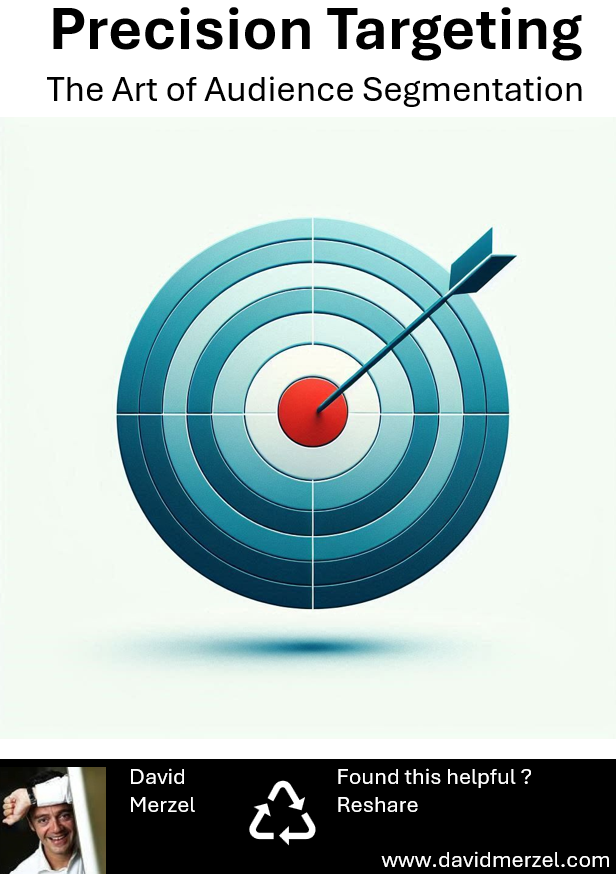
At Unilever, we utilized the Censydiam model, a powerful tool for consumer segmentation and brand positioning. Developed by the Belgian research agency Synovate (now part of Ipsos), Censydiam provides a framework for understanding consumer motivations and behaviors across different product categories[1].
The Censydiam model is based on eight fundamental human motivations: Security, Vitality, Enjoyment, Conviviality, Belonging, Recognition, Power, and Control. These motivations are mapped onto a circular model, creating a comprehensive view of consumer needs and desires. This approach allowed us to position each margarine brand precisely, ensuring that we were addressing specific consumer motivations and not cannibalizing our own market share.
For instance, one brand might be positioned to appeal to consumers seeking vitality and health, while another could target those looking for indulgence and enjoyment. This meticulous segmentation strategy enabled us to craft tailored marketing messages and product offerings that resonated deeply with each target audience.
AI-Powered Persona Development
In today’s data-rich environment, AI has become an indispensable tool in developing detailed, nuanced audience personas. Let’s explore how some innovative companies are leveraging AI in this domain:
Spotify’s Taste Profiles
Spotify uses AI to analyze listening habits and create detailed taste profiles for its users. These profiles go beyond simple genre preferences, considering factors like tempo, mood, and even the time of day when certain types of music are consumed. This deep understanding allows Spotify to create hyper-personalized playlists and recommendations, effectively segmenting its vast user base into countless micro-audiences.
Netflix’s Viewing Clusters
Netflix takes audience segmentation to another level with its AI-driven viewing clusters. The streaming giant doesn’t just categorize users by genre preferences; it creates complex viewer profiles based on viewing history, search patterns, and even how users interact with the platform’s interface. This granular segmentation allows Netflix to tailor its content recommendations and even inform its content creation decisions.
Amazon’s Predictive Analytics
Amazon’s use of AI in audience segmentation is perhaps one of the most sophisticated in the e-commerce world. Their algorithms analyze not just purchase history, but also browsing patterns, wish list additions, and even the time spent looking at specific products. This allows Amazon to create predictive models that anticipate customer needs, often before the customers themselves are aware of them.
The Human Touch in the Age of AI
While AI provides us with unprecedented insights into our target audience, it’s crucial to remember the importance of human interpretation and empathy. As we discussed in our White Belt chapter, the principles of humility and focus are paramount. AI gives us the data, but it’s our human understanding that turns that data into meaningful connections with our audience.
I’m reminded of a campaign we ran for a financial services app. Our AI analysis had identified a segment of users who frequently checked their account balances but rarely made transactions. The data suggested they were financially cautious, perhaps even anxious. However, it was our team’s human insight that translated this into a successful campaign focused on financial empowerment and education, rather than pushing for more transactions.
Integrating AI into Your Audience Targeting Strategy
As we advance in our Orange Belt journey, here are some key steps to consider when using AI to refine your target audience:
- Start with Quality Data: Ensure your AI models are fed with clean, comprehensive data from various touchpoints.
- Combine Quantitative and Qualitative Insights: Use AI for data analysis, but complement it with qualitative research like focus groups or interviews.
- Create Dynamic Personas: Use AI to update your audience personas in real-time as new data comes in.
- Test and Iterate: Use A/B testing to refine your audience segments and messaging continuously.
- Maintain Ethical Standards: Ensure your use of AI in audience targeting respects privacy concerns and ethical considerations.
A concrete example of integrating AI into audience targeting strategy is the use of Natural Language Processing (NLP) in social media listening. For instance, a cosmetics company could use AI-powered NLP tools to analyze millions of social media posts, comments, and reviews related to skincare. The AI could identify emerging trends, common pain points, and the language customers use to describe their skincare needs.
This analysis could reveal a growing segment of environmentally conscious consumers who are specifically looking for sustainable, plastic-free packaging options for their skincare products. The AI could categorize these consumers based on factors like age, location, and other interests, creating a detailed persona of the “eco-conscious skincare enthusiast.”
Armed with this AI-generated insight, the company could then develop a new line of products with sustainable packaging, tailor its marketing messages to highlight environmental benefits, and even partner with eco-friendly influencers identified by the AI as having high engagement with this specific audience segment.
This AI-driven approach allows for a level of precision and scale in audience targeting that would be impossible to achieve through manual analysis alone, while still leaving room for human creativity and strategic decision-making in how to act on these insights.
As we move forward, remember that understanding your target audience is not just about data points and segments – it’s about connecting with real people. In the next section, we’ll explore how to position your product effectively to resonate with the audience you’ve so carefully identified.
By blending the precision of AI with the nuance of human understanding, we can create GTM strategies that don’t just reach our target audience, but truly speak to them. After all, in both the dojo and the marketplace, true mastery comes from understanding not just the technique, but the person you’re engaging with.
Citations:
[1] https://ppl-ai-file-upload.s3.amazonaws.com/web/direct-files/23985622/e8e73e1b-5432-4870-b22a-0ea8a72d7da4/book.docx
Engaging with You

As part of this journey, I also want to engage with you, my readers, by sharing portions of the book. Your feedback, comments, and suggestions will be invaluable in shaping the final product. I believe in the power of co-creation and would love to incorporate any specific concepts or ideas you might have. Of course, I will give full credit to any contributions that make it into the book. I will make sure nothing confidential will be published in the book.
Join the Conversation
If you have any suggestions or would like to discuss specific concepts, feel free to connect with me on LinkedIn thru personal messaging. I’m always happy to have a conversation and explore new ideas. Together, we can create something truly special. For collaboration or project discussions, you can also schedule a conversation in my calendar below or connect with me via email at david.merzel@hotmail.com. I look forward to further discussions!


Leave a Reply